
A nail gun is a power tool designed to drive nails quickly and consistently into materials like wood, plywood, and trim. Instead of using a hammer, nail guns use compressed air, electricity, or gas cartridges to push nails with controlled force. The result is faster work, better accuracy, and less physical effort.
In modern construction and woodworking, nail guns are considered essential tools. According to data from the U.S. Bureau of Labor Statistics, nail guns account for thousands of workplace injuries each year, but they also dramatically increase productivity when used correctly. Contractors report completing framing work up to 3–4 times faster using pneumatic nailers compared to manual hammering.
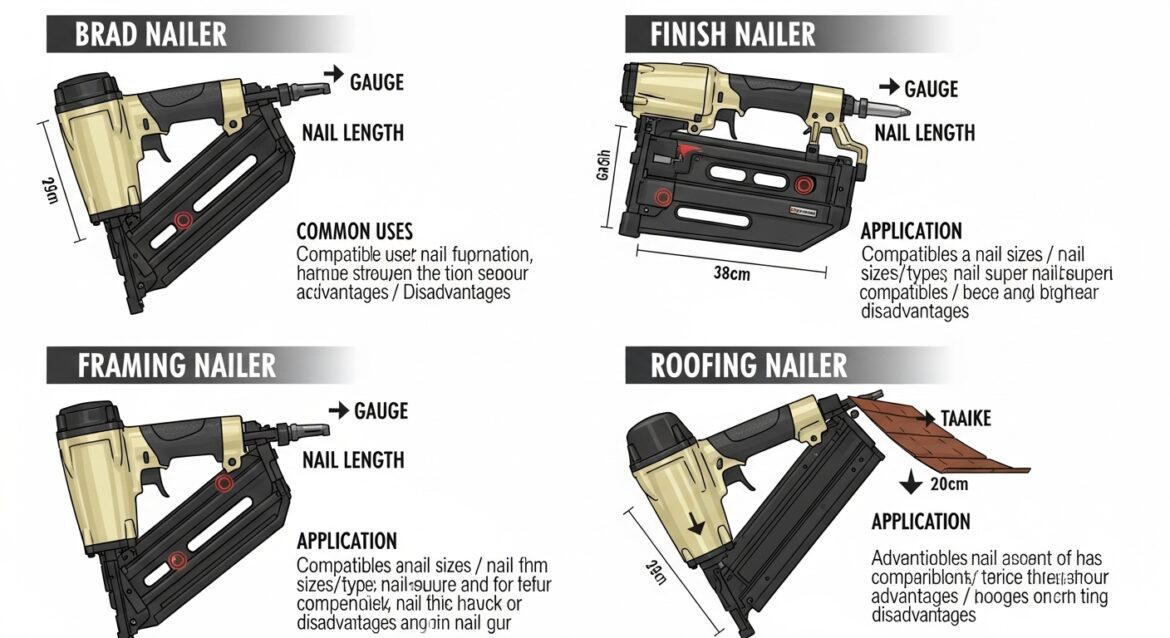
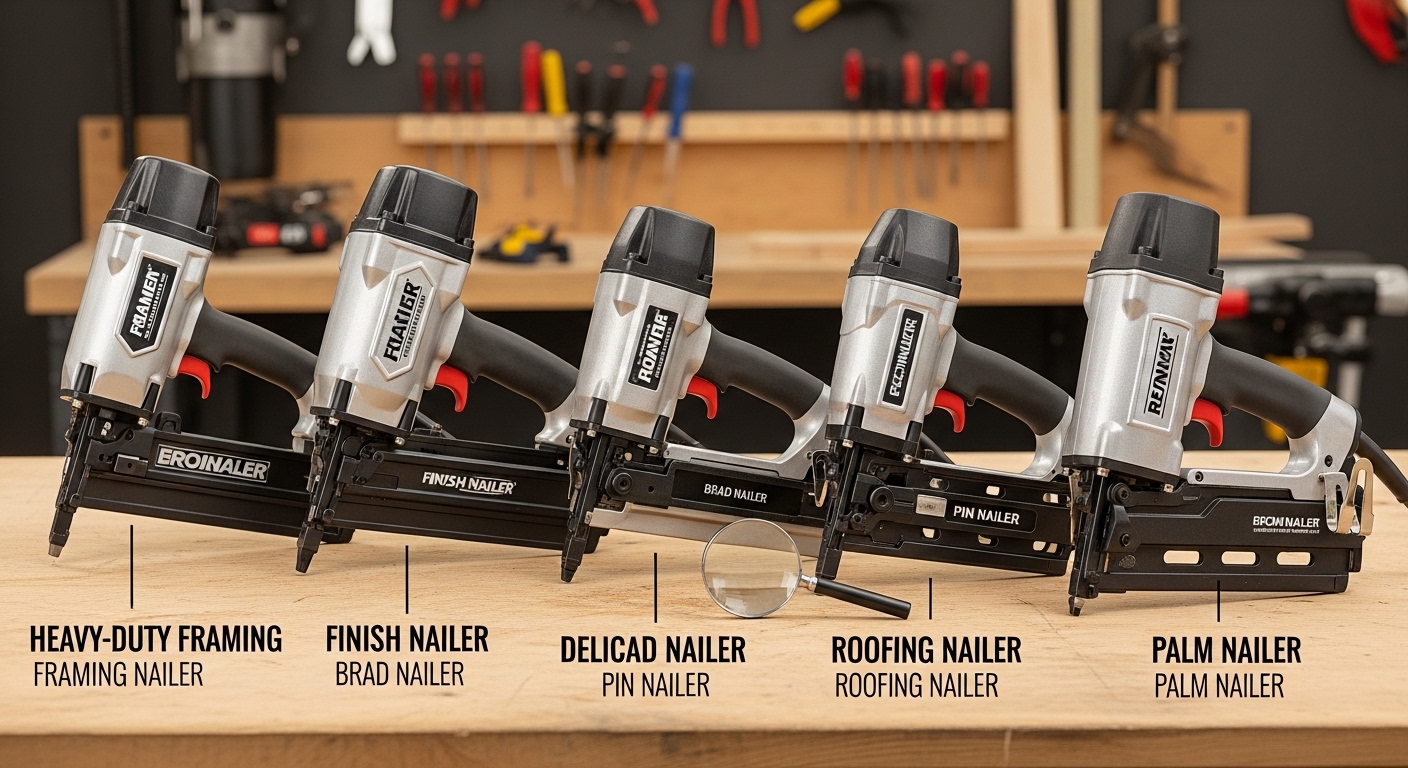
However, not all nail guns are the same. Each type is built for a specific task. Using the wrong tool can damage materials, reduce holding strength, or waste time. The three most commonly used nail guns are the framing nailer, finish nailer, and brad nailer. Each one drives different nail sizes and is designed for different types of woodworking and construction projects.
This guide explains the main types of nail guns, how they work, and how to choose the right one for your project. Whether you are a DIY enthusiast or a professional contractor, understanding these tools helps you work faster and produce cleaner results.
What Are the Main Types of Nail Guns?
Quick answer: The most common nail guns are framing nailers, finish nailers, and brad nailers. Each tool uses a different nail gauge and is designed for specific tasks ranging from heavy construction to delicate trim work.
Nail guns are categorized based on the size of nails they drive and the applications they are designed for. Choosing the correct nail gun ensures strong joints, clean finishes, and efficient work.
| Nail Gun Type | Nail Size | Primary Use | Typical Gauge |
|---|---|---|---|
| Framing Nailer | 2” – 3.5” | Structural framing, decking | 10–12 gauge |
| Finish Nailer | 1” – 2.5” | Trim, molding, cabinetry | 15–16 gauge |
| Brad Nailer | 0.5” – 2” | Light trim and delicate wood | 18 gauge |
Let’s explore each type in detail.
What Is a Framing Nailer and When Should You Use One?
Quick answer: A framing nailer is a heavy-duty nail gun designed to drive large nails used in structural construction such as house framing, deck building, and fencing.
A framing nailer is the most powerful type of nail gun used in woodworking and construction. It drives thick nails between 2 and 3.5 inches long, which are strong enough to hold structural components together.
Typical Uses of a Framing Nailer
- Building house frames
- Installing roof decking
- Constructing wooden fences
- Building decks and patios
- Assembling large wooden structures
Framing nailers use either clipped-head or round-head nails. Round-head nails are required by many building codes because they provide stronger holding power.
Case Study: Productivity Gains in Residential Framing
A construction study published by the National Association of Home Builders showed that pneumatic framing nailers reduced framing labor time by nearly 40% compared to hammer-based methods. Contractors were able to frame walls significantly faster while maintaining structural consistency.
Key Features
- High driving power
- Long nail compatibility
- Durable metal construction
- Sequential and bump firing modes
However, framing nailers are heavy and not suitable for delicate work. Using one on trim or molding can easily split the wood.
What Is a Finish Nailer and What Projects Is It Best For?
Quick answer: A finish nailer is used for detailed woodworking such as installing baseboards, crown molding, and furniture trim where strong holding power and clean results are required.
A finish nailer sits between framing nailers and brad nailers in terms of size and power. It uses 15 or 16 gauge nails that provide solid holding strength while leaving a relatively small hole.
Common Applications
- Installing baseboards
- Crown molding installation
- Door and window trim
- Cabinet building
- Furniture assembly
Finish nailers are widely used by carpenters and interior finish professionals because they offer a balance between strength and appearance.
15 Gauge vs 16 Gauge Finish Nailers
| Feature | 15 Gauge | 16 Gauge |
|---|---|---|
| Holding strength | Higher | Moderate |
| Hole size | Slightly larger | Smaller |
| Best use | Heavy trim and cabinets | General interior trim |
For example, installing crown molding typically benefits from a 15-gauge finish nailer because the thicker nails hold heavier pieces securely.
Real-World Example
Professional carpenters installing baseboards in a 2,000 sq ft home can complete the trim installation in a few hours using finish nailers. The same job using a hammer may take an entire day and often leaves visible marks on the trim.
What Is a Brad Nailer and Why Is It Used for Delicate Work?
Quick answer: A brad nailer is a lightweight nail gun that uses 18-gauge nails designed for delicate woodworking tasks that require minimal surface damage.
A brad nailer is commonly used for fine woodworking and light trim installation. The nails are thin and leave very small holes, which reduces the need for wood filler.
Typical Uses
- Attaching thin trim
- Craft woodworking
- Paneling installation
- Decorative moldings
- Small DIY furniture
Brad nailers are especially useful when working with soft wood or small pieces that could split with larger nails.
Advantages of Brad Nailers
- Minimal wood splitting
- Small nail holes
- Lightweight design
- Precise control
Because brad nails are thinner, they do not provide strong structural support. That is why they are best used for appearance-focused projects rather than load-bearing construction.
What Are Other Types of Nail Guns You Should Know?
Quick answer: Besides framing, finish, and brad nailers, there are specialized nail guns designed for roofing, flooring, siding, and upholstery.
While the three main nail guns cover most woodworking projects, several specialized tools exist for specific tasks.
Roofing Nailer
Roofing nailers are designed to install shingles quickly. They use short nails with wide heads to secure roofing materials without tearing them.
Flooring Nailer
Flooring nailers are used for installing hardwood floors. They drive nails at an angle through the tongue of flooring boards.
Siding Nailer
Siding nailers attach exterior siding materials such as fiber cement and wood panels.
Pin Nailer
Pin nailers use extremely thin nails and are mainly used for delicate furniture assembly and finishing touches.
How Do You Choose the Right Nail Gun for Your Project?
Quick answer: Choose a nail gun based on the size of nails required, the type of project, and the material you are working with.
Selecting the right tool depends on several factors.
1. Type of Project
- House framing → framing nailer
- Interior trim → finish nailer
- Decorative molding → brad nailer
2. Nail Size
The nail length and thickness determine how strong the connection will be.
3. Power Source
- Pneumatic nailers (air compressor)
- Cordless battery nailers
- Gas-powered nailers
Pneumatic nailers remain the most widely used in professional construction because they deliver consistent power and reliability.
4. Material Type
Softwoods, hardwoods, and engineered materials require different nail sizes and driving force.
Conclusion: Which Nail Gun Should You Choose?
Choosing the right nail gun depends on the type of project you are working on. If you are building structural frameworks or decks, a framing nailer is the correct choice. For interior trim work such as baseboards and molding, a finish nailer provides the right balance of strength and clean results. When working on delicate woodworking projects or small decorative pieces, a brad nailer is the best option.
Each nail gun serves a specific purpose. Using the correct tool improves efficiency, reduces mistakes, and produces professional-quality results.
If you are starting your woodworking toolkit, many professionals recommend owning both a finish nailer and a brad nailer for versatility. For larger construction work, adding a framing nailer becomes essential.
Ready to start your next project? Choose the right nail gun for the job and experience faster, cleaner, and more precise woodworking results.
FAQ: Types of Nail Guns
What nail gun should beginners start with?
Most beginners start with an 18-gauge brad nailer. It is lightweight, easy to control, and suitable for many DIY woodworking projects.
Can a finish nailer replace a framing nailer?
No. Finish nailers do not drive nails large enough for structural work. Framing nailers are specifically designed for load-bearing construction tasks.
Do professionals use cordless nail guns?
Yes. Many contractors use cordless nailers because they offer portability and eliminate the need for air compressors. However, pneumatic nailers are still preferred for continuous heavy-duty work.
What size nails does a brad nailer use?
Brad nailers typically use 18-gauge nails ranging from 0.5 inches to 2 inches long.
Are nail guns safe to use?
Nail guns are safe when used correctly. Wearing safety glasses, using sequential trigger mode, and keeping hands away from the firing area significantly reduce injury risks.
What is the difference between a brad nailer and a finish nailer?
A brad nailer uses thinner 18-gauge nails for delicate work, while a finish nailer uses thicker 15–16 gauge nails for stronger trim installation.
Do nail guns require an air compressor?
Many nail guns are pneumatic and require an air compressor. However, battery-powered and gas-powered models are also available.
Read More Also: How to Help Your Kids Explore Their Interests