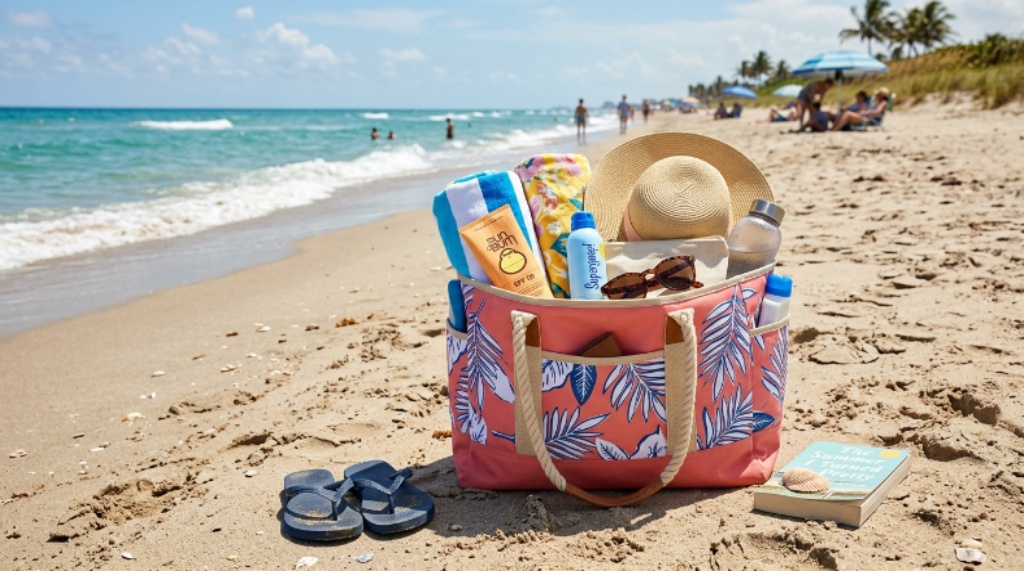
A day at the beach or pool should feel effortless. You should be able to pack everything you need, head out the door, and enjoy your time without stress. However, the wrong bag can turn a relaxing outing into a frustrating experience. Wet towels soaking through fabric, sand collecting in every corner, and straps digging into your shoulders are all too familiar problems.
The solution is simple: choose the right large waterproof tote bag. A good bag protects your belongings, carries everything comfortably, and holds up through an entire summer season and beyond. However, with so many options available, knowing what to look for is essential.
This guide walks you through every factor worth considering so you can make a confident, well-informed choice.
Why Waterproofing Is the Most Important Feature
Everything else about a beach or pool bag matters only if the bag can handle water. That sounds obvious, but many bags marketed as water-resistant fall short when genuinely tested. There is an important difference between water-resistant and waterproof, and understanding it saves you from a disappointing purchase.
Water-resistant bags repel light splashes and brief contact with moisture. They are fine for a light drizzle but will not hold up if submerged, heavily splashed, or left sitting in a puddle of water at the pool’s edge. Waterproof bags, on the other hand, use sealed seams, coated fabrics, or laminated linings that prevent water from passing through under sustained exposure.
For pool and beach use, true waterproofing is what you need. Look for bags described as fully waterproof rather than simply water-resistant. Additionally, check whether the interior lining is sealed or coated. A bag with a waterproof exterior but an unprotected lining can still allow moisture to seep into the main compartment over time.
Understanding the Materials That Make a Bag Waterproof
Not all waterproof materials are equal. The fabric used in your bag determines how well it repels water, how durable it is, and how easy it is to clean after a sandy, wet day out.
PVC and Vinyl
PVC and vinyl are among the most common materials used in waterproof beach bags. They are fully water-resistant, easy to wipe clean, and widely available at a range of price points. However, PVC can feel stiff and less breathable than fabric alternatives. In very hot weather, items stored in a PVC bag can get warm quickly. Despite this, PVC bags remain a popular and practical choice for pool use where waterproofing is the top priority.
Coated Canvas and Nylon
Coated canvas and coated nylon strike a better balance between function and feel. These fabrics are treated with a waterproof coating that repels water while maintaining a softer, more flexible structure. They are lighter than PVC, more comfortable to carry for long periods, and usually more stylish in appearance. Additionally, coated nylon is highly durable and resists tearing and abrasion, making it well-suited to the rough-and-tumble environment of a beach day.
TPU-Laminated Fabric
Thermoplastic polyurethane, or TPU, is a premium waterproofing material increasingly used in high-quality outdoor and beach bags. It is applied as a laminate over a base fabric, creating a flexible, fully sealed surface that blocks water without cracking or peeling over time. TPU-laminated bags tend to cost more, but they offer superior durability and a more refined look than standard PVC alternatives.
Size and Capacity: How Much Do You Actually Need?
The right size depends on who you are packing for and how long you plan to stay. Oversized beach bags are ideal for families, couples, or anyone who likes to bring everything they might possibly need. However, they can become unnecessarily heavy if you are heading out solo for a quick swim.
A good rule of thumb is to think about what you routinely carry to the beach or pool. A typical solo outing might require a towel, sunscreen, a change of clothes, a water bottle, sunglasses, and your phone. For that, a medium bag of around 20 to 30 litres is usually sufficient.
For families or full-day outings, a carry-all tote with a capacity of 40 litres or more makes much more sense. You need room for multiple towels, snacks, toys, extra clothing, and all the extras that come with bringing children along. A larger bag also means you can pack everything into a single bag rather than juggling multiple smaller ones.
When assessing size, also consider the bag’s dimensions. A bag that is wide and shallow may hold the same volume as one that is tall and narrow, but the wider bag allows you to pack towels flat and access items more easily. Think about how you like to pack and choose dimensions that suit your habits.
Strap Design and Carrying Comfort
A bag can be the perfect size and completely waterproof, but if it is uncomfortable to carry, you will not enjoy using it. Carrying comfort is often an afterthought in the design of beach bags, but it matters enormously on long walks from the car park to the beach.
Strap Width and Padding
Narrow straps concentrate the weight of a loaded bag onto a small area of your shoulder. When the bag is full, this becomes painful quickly. Wide, flat straps distribute weight more evenly and are significantly more comfortable for heavy loads. Padded straps take this one step further and are worth seeking out if you regularly carry a fully loaded bag any distance.
Strap Length and Adjustability
Straps that are too short force you to carry the bag awkwardly. Straps that are too long result in the bag swinging and bumping against your leg with every step. Adjustable straps solve both problems by allowing you to find the perfect carrying position. Additionally, some bags include both short carry handles and longer shoulder straps, giving you the flexibility to switch between carrying styles depending on the situation.
Cross-Body and Backpack Options
Some larger waterproof totes include a detachable or convertible cross-body strap. This spreads the weight across your body rather than loading it onto one shoulder, which is far more comfortable for longer carries. A small number of oversized beach bags are also designed to convert into backpacks, which is useful when you need both hands free for children or equipment.
Interior Layout and Pocket Organisation
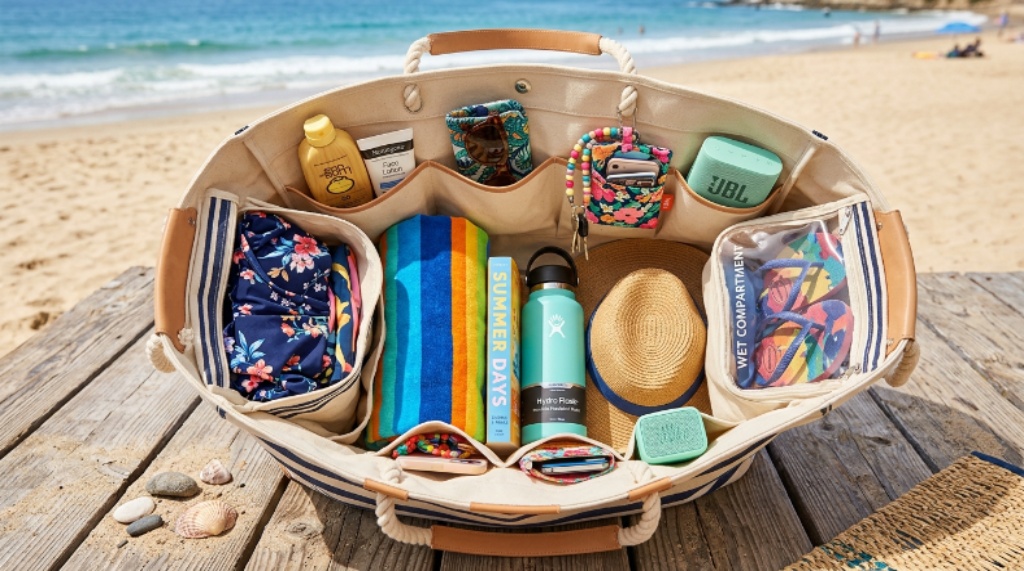
How a bag is organised on the inside affects how easy it is to use in practice. A single large compartment with no separation sounds simple, but in reality it means digging through wet towels to find your keys every time you need them.
Look for bags that include at least one interior zip pocket for valuables like your phone, wallet, and keys. A separate wet pocket or waterproof inner compartment is also extremely useful. It allows you to store wet swimwear or damp towels away from dry items so everything does not end up equally wet by the end of the day.
Exterior pockets add further convenience. A quick-access outer pocket for sunscreen, lip balm, or a water bottle means you do not have to open the entire bag every time you need something small. Additionally, some bags include a built-in key clip or ring inside a pocket, which prevents that familiar frustrating moment of losing your keys at the bottom of a stuffed bag.
Ease of Cleaning and Long-Term Durability
A beach bag will get sandy, wet, and occasionally stained. How easy it is to clean has a direct impact on how long it stays looking good and how pleasant it is to use over multiple seasons.
The best waterproof bags can be rinsed out with a garden hose or wiped clean with a damp cloth. Smooth interior linings and sealed seams mean that sand does not collect in fabric folds and that soap and water can reach every surface. Avoid bags with heavily textured interiors or uncoated fabric linings, as these trap sand and are much harder to clean thoroughly.
Durability goes hand in hand with cleanability. Reinforced handles, sturdy zip closures, and double-stitched seams are all signs of a bag built to last. Pull on the handles in the shop or check product photos carefully when buying online. The stress points around the straps and handles are where cheaper bags tend to fail first.
Style and Design Choices Worth Considering
Function should always come first when choosing a waterproof tote. However, you will use this bag regularly and carry it in public, so it makes sense to choose something you actually like the look of.
Waterproof beach bags come in a wide range of styles, from clean and minimalist to brightly patterned and bold. Neutral colours like navy, black, beige, and olive tend to stay looking clean longer than lighter shades and are more versatile across different outfits. That said, a bold, cheerful print is perfectly practical if it makes you happy every time you use it.
Consider also whether you want a bag that doubles as an everyday carry tote. Many well-designed waterproof bags look smart enough to use for grocery shopping, the gym, or a casual day out. If versatility matters to you, choose a design and colour that works beyond the beach as well.
Conclusion
Choosing the right large waterproof tote bag for the pool or beach comes down to a handful of key decisions. Start with genuine waterproofing. Look for sealed seams, coated fabrics, or laminated linings that protect your belongings from sustained water exposure. Choose a size that matches your typical outing, whether that is a solo swim or a full family day out. Prioritise wide, padded straps for comfort on longer carries, and look for a practical interior layout with separate pockets for wet items and valuables.
Oversized beach bags and carry-all totes that combine all of these features are widely available at a range of price points. You do not need to spend a fortune to find one that works well. You simply need to know what to look for. With the right bag by your side, every trip to the beach or pool becomes a little easier and a lot more enjoyable.
Frequently Asked Questions
What is the difference between waterproof and water-resistant beach bags?
Water-resistant bags repel light splashes and brief contact with moisture. Waterproof bags use sealed seams, coated or laminated fabrics, and protected linings that block water under sustained exposure. For beach and pool use, a fully waterproof bag offers much better protection for your belongings.
How large should a beach bag be for a family of four?
For a family of four spending a full day at the beach, a bag with a capacity of at least 40 litres is recommended. This allows room for multiple towels, changes of clothing, snacks, sunscreen, and toys without forcing you to carry multiple separate bags.
Can I machine wash a waterproof beach tote?
It depends on the material. PVC and vinyl bags should not be machine washed, as heat and agitation can damage the waterproof coating. Coated nylon bags can sometimes tolerate a gentle cold cycle, but hand washing or hosing down is safer and extends the life of the waterproofing. Always check the care label before washing.
What features should I look for to protect valuables at the beach?
Look for a bag with an interior zip pocket lined with waterproof fabric. A built-in key clip prevents keys from sinking to the bottom. Some bags also include RFID-blocking pockets for cards and travel documents. Keeping valuables in a dedicated inner pocket separates them from wet items and makes them easier to find.
Are oversized beach bags suitable for everyday use?
Many waterproof tote bags are versatile enough for everyday use beyond the beach. Choose a neutral colour and a clean design if you want a bag that works as a gym bag, grocery tote, or casual day bag as well. Look for structured bags that hold their shape when empty, as these tend to look more polished in everyday settings.