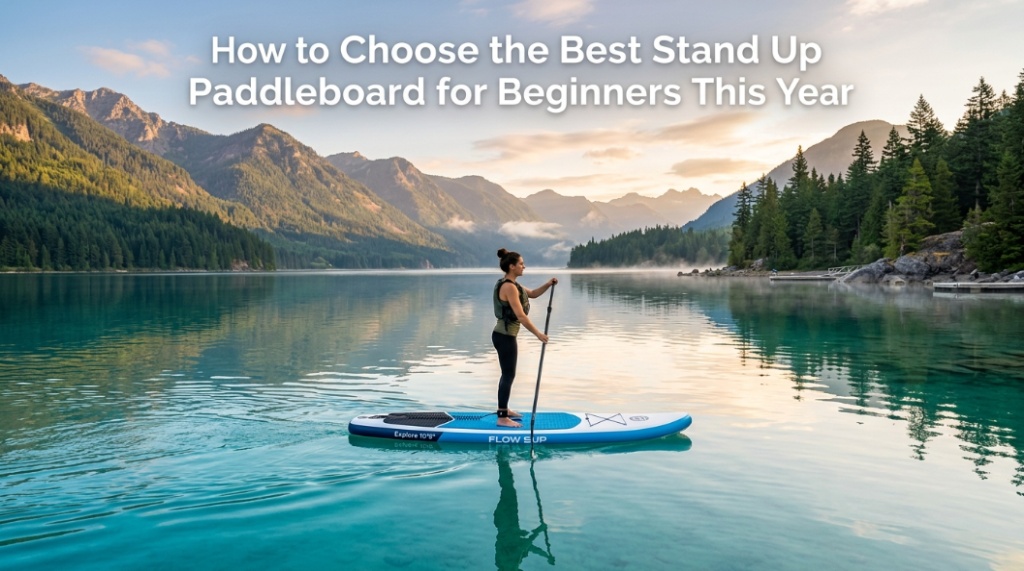
Most people quit paddle boarding after their first bad board—not because the sport is hard, but because they unknowingly bought the wrong beginner paddle boards for their weight, balance level, or water conditions. A stable, beginner-friendly SUP can make your first ride feel smooth within minutes, while the wrong shape can leave you falling into the water every few strokes.
What Is a Beginner Paddle Board and Why Does Choosing the Right One Matter?
A beginner paddle board is a stable, easy-to-control stand up paddleboard designed to help new riders learn balance, paddling, and turning safely and comfortably.
Stand up paddle boarding continues to grow globally because it combines fitness, outdoor recreation, and low-impact exercise. According to outdoor recreation industry reports, paddle boarding participation has steadily increased over recent years due to its accessibility for all age groups.
But beginners often make one expensive mistake: buying a board based on looks or price instead of stability and usability.
If the board is too narrow, too short, or poorly constructed, learning becomes frustrating. That frustration leads many first-time paddlers to quit before they actually experience how enjoyable SUP riding can be.
The good news? Choosing the right beginner SUP board is simpler once you understand a few core factors:
- Board type
- Board size
- Width and stability
- Weight capacity
- Inflatable vs hard board
- Fin setup
- Intended water conditions
Once these are matched correctly, even total beginners can paddle confidently within their first session.
What Size Paddle Board Is Best for Beginners?
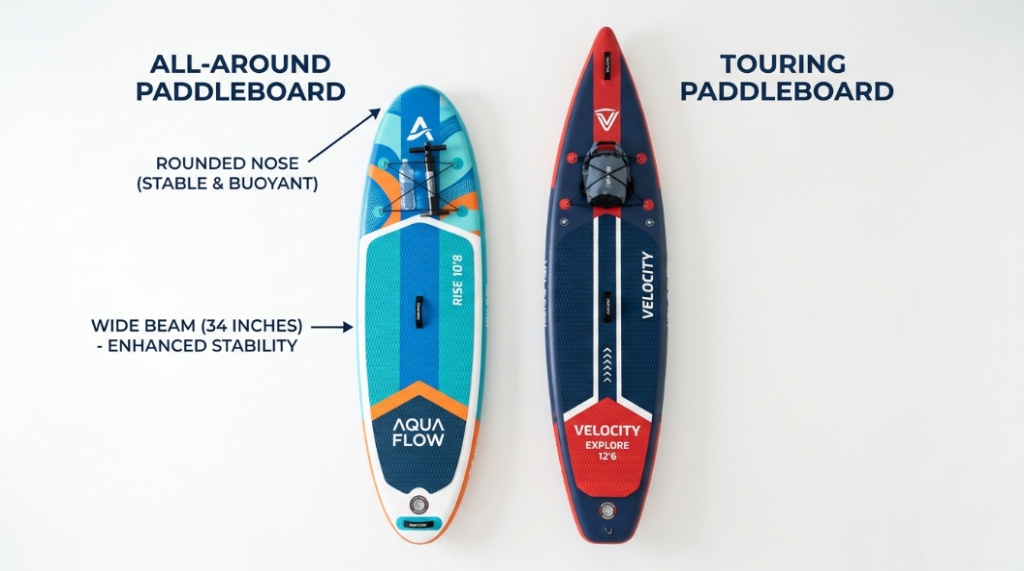
The best paddle board size for beginners is usually between 10’6” and 11’6” long and at least 32” wide for maximum stability and easy balance.
Size affects nearly everything in paddleboarding:
- Balance
- Tracking
- Turning ability
- Speed
- Confidence level
A wider board creates more surface area on the water, which improves stability. That matters most when you’re still learning proper foot positioning and paddle strokes.
Why Does Width Matter More Than Length for Beginners?
Board width directly affects stability. Most beginner paddle boards should be between 32 and 35 inches wide.
Narrow boards move faster but wobble more. Wider boards feel more stable and forgiving.
| Board Width | Best For | Stability Level |
|---|---|---|
| 28”–30” | Advanced riders | Low |
| 31”–33” | Beginners and casual riders | High |
| 34”–36” | Heavy riders, yoga, fishing | Very High |
How Long Should a Beginner Paddle Board Be?
Most new paddlers do best with boards around 10’6” to 11’6”.
Longer boards:
- Track straighter
- Glide easier
- Require fewer paddle strokes
Short boards turn quickly but feel less stable for inexperienced riders.
Should Beginners Choose an Inflatable or Hard Paddle Board?
Most beginners should choose inflatable paddle boards because they are more stable, portable, safer, and easier to store.
Inflatable SUP boards dominate the beginner market for several practical reasons.
Why Are Inflatable Paddle Boards Better for Most Beginners?
Inflatable paddle boards use military-grade PVC construction and drop-stitch technology, making modern boards surprisingly rigid.
Advantages include:
- Easier transportation
- Compact storage
- Softer surface for falls
- More durability against impacts
- Better beginner stability
If you live in an apartment, travel frequently, or own a smaller vehicle, inflatable SUP boards are significantly more convenient.
When Should You Choose a Hard Paddle Board Instead?
Hard boards are better for performance-focused riders seeking speed, surfing, or advanced touring.
Benefits include:
- Better glide performance
- Sharper turns
- Higher speed
- More responsive handling
However, they cost more, require roof racks, and are easier to damage during transport.
| Feature | Inflatable SUP | Hard SUP |
|---|---|---|
| Portability | Excellent | Poor |
| Storage | Easy | Difficult |
| Beginner Stability | High | Moderate |
| Performance Speed | Moderate | Excellent |
| Durability | Very Good | Moderate |
| Travel Friendly | Excellent | Poor |
What Weight Capacity Should a Beginner Paddle Board Have?
A beginner paddle board should support at least 20–30 pounds more than the rider’s body weight for optimal stability and performance.
Weight capacity is often ignored, but it directly impacts balance and board efficiency.
If the board sits too low in the water:
- Balance becomes harder
- Glide decreases
- Turning suffers
- Water resistance increases
How Do You Calculate the Right Paddle Board Weight Limit?
Use this simple guideline:
- Rider weight + gear weight + 20% buffer
For example:
- 180 lb rider
- 15 lb gear
- Recommended board capacity: 240–260 lbs
This extra margin improves stability dramatically for beginners.
What Type of Paddle Board Is Best for Beginners?
All-around paddle boards are the best choice for beginners because they work well in multiple water conditions and offer the highest stability.
Different SUP categories are designed for different activities.
What Are the Main Types of Paddle Boards?
| Board Type | Best Use | Beginner Friendly? |
|---|---|---|
| All-Around | General recreation | Excellent |
| Touring | Long-distance paddling | Moderate |
| Surf SUP | Ocean waves | Poor |
| Yoga SUP | Fitness and yoga | Good |
| Fishing SUP | Fishing stability | Good |
| Racing SUP | Speed | Not Recommended |
For most first-time paddlers, an all-around inflatable SUP is the safest and smartest purchase.
Which Paddle Board Features Matter Most for Beginners?
The most important beginner paddle board features are stability, deck padding, fin setup, carrying handles, and included accessories.
Why Is Deck Padding Important?
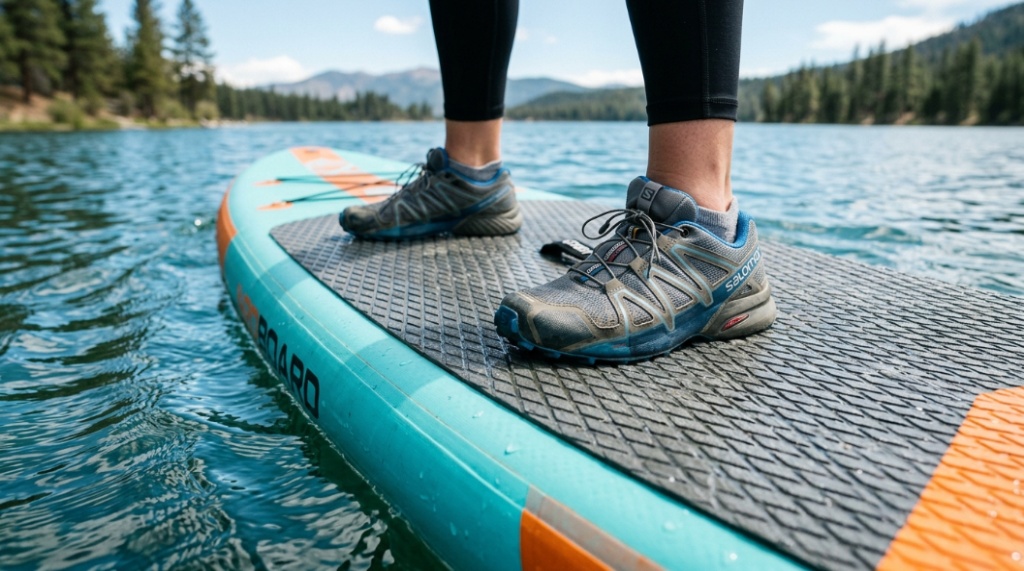
EVA foam deck pads improve grip and comfort while standing or kneeling.
This helps beginners:
- Reduce slipping
- Improve confidence
- Protect knees during learning
What Fin Setup Is Best for Beginners?
A 2+1 fin setup is ideal because it improves tracking and stability.
This configuration includes:
- One larger center fin
- Two smaller side fins
It helps the board move straighter with fewer corrective strokes.
What Accessories Should Beginners Look For?
A quality beginner paddle board package should include:
- Adjustable paddle
- Safety leash
- Pump
- Carry backpack
- Repair kit
- Waterproof phone pouch
Buying a complete SUP package usually saves money compared to buying accessories separately.
How Much Should Beginners Spend on a Paddle Board?
Most beginners should spend between $300 and $800 for a reliable paddle board package with good durability and stability.
Extremely cheap paddle boards often compromise on:
- Material quality
- Rigidity
- Valve reliability
- Fin systems
- Durability
A low-quality board may flex excessively on the water, reducing balance and overall performance.
Are Expensive Paddle Boards Worth It for Beginners?
Not always.
High-end SUP boards above $1,200 are usually designed for:
- Racing
- Advanced touring
- Professional-level performance
Most beginners will not notice those advanced differences during their first year.
Instead, focus on:
- Stability
- Construction quality
- Warranty
- Customer reviews
What Mistakes Should Beginners Avoid When Buying a Paddle Board?
The biggest beginner mistakes are choosing boards that are too small, too narrow, or designed for advanced performance.
What Are the Most Common Paddle Board Buying Mistakes?
- Buying based only on price
- Ignoring weight capacity
- Choosing racing boards too early
- Ignoring portability needs
- Skipping safety accessories
- Buying from unknown brands with poor warranties
Many beginners assume smaller boards are easier to use. In reality, smaller SUP boards are less stable and harder to balance on.
What Water Conditions Are Best for Beginner Paddle Boards?
Flat water conditions like lakes, calm rivers, and protected bays are best for beginner paddle boarding.
Calm water allows new paddlers to learn:
- Balance techniques
- Paddle strokes
- Turning methods
- Foot positioning
Should Beginners Use Paddle Boards in Ocean Waves?
Beginners should avoid strong surf and rough ocean conditions until they develop better control and confidence.
Ocean waves introduce:
- Changing currents
- Board instability
- Wave timing challenges
- Wind resistance
Learning in calm water first creates a much smoother progression.
How Do Beginners Improve Faster on a Paddle Board?
Beginners improve faster by using proper stance, practicing consistently, and choosing stable equipment.
What Is the Correct Beginner Paddle Board Stance?
Your feet should be:
- Shoulder-width apart
- Centered on the board
- Knees slightly bent
- Eyes facing forward
Looking down at your feet actually reduces balance because your body naturally follows your gaze.
How Long Does It Take to Learn Paddle Boarding?
Most beginners can comfortably stand and paddle within 30–60 minutes on a stable SUP board.
Skill development improves rapidly after the first few sessions.
Within a few weeks, many beginners can:
- Turn efficiently
- Paddle longer distances
- Handle light chop
- Maintain better endurance
Are Beginner Paddle Boards Good for Fitness?
Yes, paddle boarding is an excellent low-impact full-body workout that improves balance, endurance, and core strength.
SUP workouts engage:
- Core muscles
- Shoulders
- Back
- Leg stabilizers
- Cardiovascular endurance
According to fitness studies on balance sports, paddleboarding can significantly improve core activation compared to many traditional gym exercises.
It’s also easier on joints than high-impact sports like running.
Conclusion: How Do You Choose the Best Beginner Paddle Board This Year?
The best beginner paddle boards are stable, wide, durable, and matched correctly to your body weight and intended water conditions.
If you remember only one thing from this guide, make it this:
Stability matters more than speed when learning.
A quality all-around inflatable SUP between 10’6” and 11’6” with at least 32 inches of width is the safest starting point for most beginners this year.
Before buying, focus on:
- Board width
- Weight capacity
- Construction quality
- Included accessories
- Water conditions
The right board makes paddleboarding enjoyable immediately. The wrong board makes learning frustrating.
Take time to choose carefully, invest in safety gear, and practice consistently. Once you gain confidence, paddleboarding becomes one of the most rewarding outdoor activities for fitness, relaxation, and adventure.
If you’re ready to start, compare beginner-friendly SUP packages carefully and prioritize stability over flashy marketing claims.
FAQ: Beginner Paddle Boards
What is the best paddle board brand for beginners?
The best paddle board brands for beginners are typically companies known for stability, durability, and reliable customer support. Popular beginner-friendly SUP brands include iRocker, Isle, Atoll, Aqua Marina, and Bluefin.
Can beginners use inflatable paddle boards?
Yes, inflatable paddle boards are often the best option for beginners because they are stable, portable, softer during falls, and easier to transport and store.
How wide should a beginner paddle board be?
A beginner paddle board should generally be between 32 and 35 inches wide to provide enough stability for learning balance and paddling techniques.
How much weight can a beginner paddle board hold?
Most beginner paddle boards support between 220 and 350 pounds depending on board size and construction. Always choose a board with extra capacity above your body weight.
Are hard paddle boards better than inflatable ones?
Hard paddle boards perform better for speed and advanced riding, but inflatable SUP boards are usually better for beginners because of portability and stability.
What size paddle should beginners use?
A beginner paddle should usually be 6–10 inches taller than the rider’s height for comfortable paddling and efficient stroke mechanics.
Is paddle boarding difficult for beginners?
No, most beginners can learn basic paddle boarding within an hour if they use a stable board and practice in calm water conditions.
📌 Related Reads
Discover: Sick of Hair-Clogged Vacuums? Here’s the Better Solution
Explore: How to Choose the Best PFD for Fishing (Avoid These Costly Mistakes)