A 10-club golf set is ideal for beginners because it simplifies club selection, improves consistency, reduces decision fatigue, and focuses practice on essential shots.
What Is a 10-Club Golf Set and Why Does It Matter?
Definition: A 10-club golf set includes the core clubs needed to play effectively—usually a driver, fairway wood, hybrid, irons (6–9), pitching wedge, sand wedge, and putter—without the complexity of a full 14-club setup.
If you are new to golf, standing over the ball is already stressful. Now imagine choosing from 14 different clubs. Different lofts. Different shafts. Different shot shapes. It becomes mental overload.
That is the problem.
Many beginners quit because the game feels complicated. They struggle with contact. They slice their driver. They chunk irons. They carry clubs they barely understand.
The agitation is real. According to data from the National Golf Foundation, many new golfers leave the game within the first few years due to frustration and slow progress. Equipment confusion plays a role.
The solution? Reduce complexity.
A 10-club set removes unnecessary choices. It keeps the focus on fundamentals: clean contact, distance control, and short-game improvement. Instead of worrying about which iron to pull, you build confidence with a smaller, more manageable setup.
Golf is hard enough. Your equipment should not make it harder.
Why Do Beginners Struggle with Full 14-Club Sets?
Quick answer: Too many clubs create confusion, inconsistent swings, and slower skill development.
Beginners often assume more clubs mean better performance. That is not true.
1. Too Many Loft Gaps
Full sets include 3-iron through pitching wedge. Most beginners cannot hit a 3 or 4 iron consistently. Low-lofted irons require high swing speed and precise contact.
2. Longer Clubs Are Harder to Control
A long iron or low-lofted fairway wood demands ball-first contact. Miss slightly and the result is a thin or fat shot.
3. Decision Fatigue
On the course, beginners already think about grip, stance, alignment, and swing path. Adding complex club choices increases hesitation.
4. Slower Practice Progress
When you rotate between too many clubs, you never fully master any of them.
With a 10-club golf set, every club has a clear purpose. You repeat the same swings more often. Repetition builds confidence. Confidence lowers scores.
What Clubs Are Typically Included in a 10-Club Golf Set?
Short answer: A balanced 10-club set covers tee shots, long approach shots, mid-irons, wedges, and putting.
| Club | Purpose |
|---|---|
| Driver | Tee shots on par 4s and par 5s |
| Fairway Wood (3 or 5) | Long shots from fairway |
| Hybrid | Replacement for long irons |
| 6–9 Irons | Mid to short approach shots |
| Pitching Wedge | Approach shots under 120 yards |
| Sand Wedge | Bunkers and short game |
| Putter | Greens |
This configuration ensures you can handle every common scenario without overcomplicating decisions.
How Do Hybrid Golf Clubs Make the Game Easier?

Direct answer: Hybrid golf clubs combine the forgiveness of fairway woods with the control of irons, making them easier to hit than long irons.
Long irons (3, 4, even 5 iron for some players) are difficult. They require speed and precise strike.
Hybrid golf clubs solve that problem.
Why Hybrids Work for Beginners
- Lower center of gravity for easier launch
- Wider sole reduces digging
- More forgiveness on off-center hits
- Higher ball flight with less effort
Case study example: In multiple independent equipment tests published by major golf retailers, high-handicap players saw improved launch angle and better carry distance when switching from long irons to hybrids. The average increase in launch height improved stopping power on greens.
For beginners, this means fewer topped shots. More greens reached. Less frustration.
Replacing 3 and 4 irons with one hybrid simplifies your bag and improves results immediately.
Why Is Fairway Wood Performance Important in a Beginner Set?
Quick answer: A forgiving fairway wood provides distance without requiring perfect contact.
After the tee shot, beginners often face long approach shots. A fairway wood—usually a 3-wood or 5-wood—bridges the gap between driver and mid-irons.
Benefits of Fairway Wood Performance
- Higher launch compared to long irons
- More forgiveness across the clubface
- Versatility from tee or turf
- Useful for second shots on par 5s
Modern fairway woods feature perimeter weighting and low center of gravity designs. These elements improve ball speed retention on off-center hits.
For beginners, this translates to more consistent carry distance.
Instead of swinging harder, you let the club design do the work.
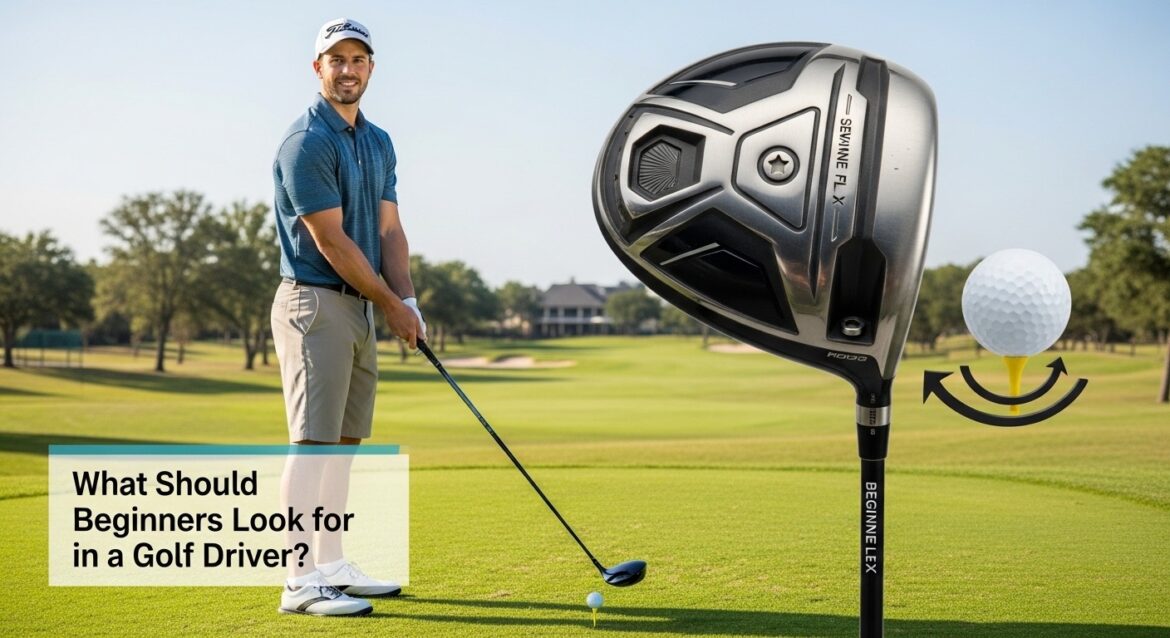
What Should Beginners Look for in a Golf Driver for Beginners?
Direct answer: A beginner driver should have high loft (10.5°–12°), a large sweet spot, and a lightweight shaft.
The driver is the most intimidating club in the bag. It is also the most important for distance.
Key Features of a Golf Driver for Beginners
- 460cc clubhead for maximum forgiveness
- Higher loft for easier launch
- Flexible shaft for moderate swing speeds
- Perimeter weighting for stability
Many beginners slice the ball due to open clubface and out-to-in swing path. A forgiving driver reduces side spin and keeps shots playable.
Data from launch monitor studies shows that increasing loft often reduces side spin and improves carry distance for slower swing speeds.
More loft does not mean less distance for beginners. It often means more usable distance.
Does a 10-Club Set Improve Skill Development Faster?
Short answer: Yes. Fewer clubs lead to more repetition and better mastery of core skills.
Golf improvement is based on repetition.
When you practice with 10 clubs instead of 14, you hit each club more often. That builds:
- Muscle memory
- Distance control
- Confidence in yardage gaps
You stop guessing. You start knowing.
Beginners benefit from mastering 7–8 core shots rather than experimenting with rarely used clubs.
This focused approach mirrors coaching strategies used by many golf instructors: simplify first, expand later.
How Does a Smaller Set Reduce On-Course Stress?
Direct answer: It reduces decision-making pressure and speeds up play.
On the course, time matters. Confidence matters more.
With fewer clubs:
- Club selection becomes faster
- You second-guess less
- Your pre-shot routine stays consistent
That leads to smoother rounds and better pace of play.
For beginners playing with experienced golfers, this matters socially too. Faster decisions reduce anxiety.
Is a 10-Club Set More Cost-Effective?
Short answer: Yes. It lowers initial investment without sacrificing essential performance.
Golf can be expensive. A full 14-club premium set costs significantly more than a streamlined beginner setup.
By choosing 10 clubs:
- You avoid paying for clubs you cannot use yet
- You reduce long-term upgrade regret
- You invest in quality over quantity
Many beginners upgrade within two years. Starting lean prevents wasted spending.
When Should You Transition to a Full 14-Club Set?
Direct answer: When you consistently break 90 and understand your yardage gaps.
Signs you are ready:
- You control trajectory intentionally
- You know exact carry distances
- You need specialized wedges
- You want precise gapping between clubs
Until then, simplicity wins.
Conclusion: Is a 10-Club Golf Set the Smart Starting Point?
A 10-club golf set is not a shortcut. It is a strategic choice.
It removes confusion. It strengthens fundamentals. It accelerates learning. It saves money.
Hybrid golf clubs improve long-shot consistency. Fairway wood performance gives you reliable distance. A properly fitted golf driver for beginners builds confidence off the tee.
Golf rewards consistency, not complexity.
If you are starting your golf journey, choose simplicity first. Master the basics. Build confidence. Then expand your bag when your skill demands it.
Ready to improve faster? Start with a focused 10-club setup and commit to mastering every club in your bag. Your scores—and your enjoyment—will reflect the difference.
Frequently Asked Questions (FAQ)
1. Can I legally play with only 10 clubs in golf?
Yes. The Rules of Golf allow up to 14 clubs, but you are not required to carry all 14. Playing with 10 clubs is completely legal.
2. Is a hybrid better than a long iron for beginners?
In most cases, yes. Hybrid golf clubs launch higher and are more forgiving, making them easier to hit consistently than 3 or 4 irons.
3. What loft driver is best for beginners?
Most beginners benefit from 10.5° to 12° loft. Higher loft improves launch angle and can increase carry distance at moderate swing speeds.
4. Do I need both a 3-wood and 5-wood?
Not necessarily. Many beginners perform better with just one fairway wood, typically a 5-wood for easier launch.
5. How many wedges should a beginner carry?
Two wedges—a pitching wedge and sand wedge—are sufficient for most beginners.
6. Will fewer clubs limit my scoring potential?
For beginners, no. In fact, fewer clubs often improve scoring by reducing confusion and increasing consistency.
7. Should beginners get custom fitted?
Basic fitting for shaft flex and club length is helpful. Full advanced fitting can wait until swing mechanics stabilize.
Related Topic: How to Optimize SAP Processes with the Right Applications
Read Next: How does sewer pollution impact the environment?